A Veterans recruitment appointment can be one of the most important steps toward a federal career, but knowing where to start isn’t always straightforward. Between eligibility requirements, military paperwork, hiring authorities, and questions about your experience, it’s easy to worry about missing something important. That’s exactly why we created this guide.
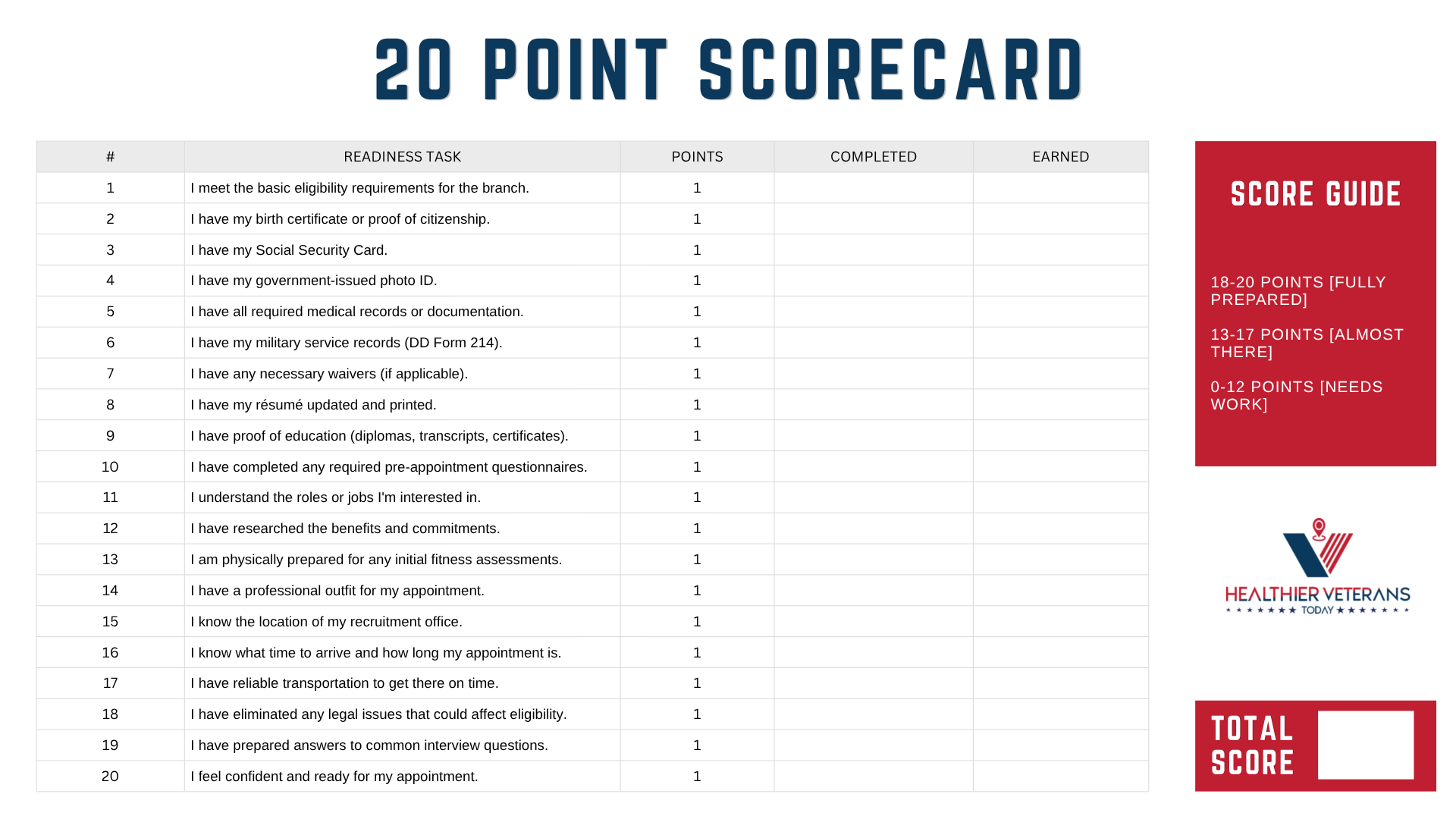
Inside, you’ll find everything you need to understand the process, plus our Veterans Recruitment Appointment Readiness Scorecard (20-Point Checklist) to help you organize your documents, confirm your eligibility, and walk into your appointment feeling prepared and confident.
Key Takeaways
- A Veterans Recruitment Appointment (VRA) is a federal hiring authority that can give eligible veterans a streamlined path to certain government jobs.
- Don’t assume you are or aren’t eligible. Recently separated veterans, disabled veterans, and veterans with certain campaign badges or expeditionary medals may qualify, so review your service and separation records beforehand.
- Arrive with your paperwork organized. Your DD-214, ID, résumé, transcripts, certifications, references, and applicable disability documentation can all be important during the appointment.
- Be ready to explain your military experience in civilian terms, focusing on skills and accomplishments such as leadership, logistics, project management, and problem-solving rather than relying on military job titles alone.
- Use the 20-Point VRA Readiness Scorecard before your appointment to check your eligibility, documents, résumé, and preparation so you can identify anything you still need to complete.
What is Veterans Recruitment Appointment?
A Veterans Recruitment Appointment (VRA) is a federal hiring authority that allows eligible veterans to apply for certain government jobs through a streamlined hiring process. During your appointment, you’ll discuss your military service, qualifications, eligibility, and career goals while learning about federal employment opportunities that match your experience.
Veterans Recruitment Appointment Readiness Scorecard
A Veterans Recruitment Appointment isn’t something you want to “wing.” The more prepared you are, the easier it is for a recruiter to understand your background and determine which opportunities you qualify for.
Use our Veterans Recruitment Appointment Readiness Scorecard (20-Point Checklist) as you work through this guide. It walks you through each step, from confirming your eligibility and gathering military records to preparing your résumé, organizing supporting documents, and thinking through the questions you may be asked.
By the end of the article, you’ll have a readiness score that shows whether you’re ready for your appointment or whether there are a few final tasks to complete first.
Who is eligible for a Veterans Recruitment Appointment?
Veterans Recruitment Appointment eligibility depends on your military service and discharge status. Many eligible applicants include recently separated veterans, disabled veterans, and those who served during qualifying campaigns or received certain service medals. Meeting the eligibility requirements can open additional federal hiring opportunities.
The most common reasons veterans qualify
One of the biggest misconceptions is that only combat veterans qualify for a Veterans Recruitment Appointment. In reality, there are several ways to become eligible, so it’s worth checking even if you’re unsure [news.va.gov].
You may qualify if you:
- Recently separated from active duty within the eligible time frame.
- Have a service-connected disability.
- Earned a campaign badge or expeditionary medal during qualifying military service.
- Meet other qualifying service requirements recognized under the VRA hiring authority.
If you’re uncertain whether your service qualifies, don’t guess. Review your DD-214, military awards, and separation paperwork before your appointment so you can confidently discuss your eligibility with the recruiter.
What should you bring to a Veterans Recruitment Appointment?
Bring documents that confirm your military service, qualifications, and eligibility. This typically includes your DD-214, government-issued ID, résumé, transcripts, certifications, disability documentation (if applicable), references, and any paperwork requested before your appointment. Having everything ready helps prevent unnecessary delays.
What happens during a Veterans Recruitment Appointment?
During a Veterans Recruitment Appointment, you’ll discuss your military background, employment goals, eligibility, and qualifications with a recruiter. They may review your documents, explain available federal hiring pathways, answer questions about the application process, and recommend positions that match your experience and skills.
If recruiters or hiring managers share their contact information, a business card holder is an easy way to keep those details organized for future follow-up.
Questions you should be prepared to answer
Think of the appointment as a conversation rather than a test. The recruiter’s goal is to understand where your experience fits within the federal workforce, so the clearer your answers are, the easier it is to identify suitable opportunities.
Recommended: Bring a notebook so you can write down recruiter recommendations, agency names, application deadlines, and next steps while everything is still fresh.
Be ready to talk about:
- The military roles and responsibilities you’ve held.
- Skills you’ve developed that transfer to civilian careers, such as leadership, project management, logistics, or technical expertise.
- The types of federal jobs or agencies that interest you.
- Whether you’re willing to relocate or travel for work.
- Any active security clearance you hold or held previously.
- Your long-term career goals and the type of work environment you’re looking for.
You don’t need to have every answer memorized, but spending a few minutes thinking about these topics beforehand will help you have a more productive conversation and leave a stronger impression.
How can you improve your chances of getting hired?
You can improve your chances by preparing thoroughly, tailoring your résumé to federal positions, clearly explaining your military experience in civilian terms, researching agencies before your appointment, and arriving with realistic career goals. Showing recruiters how your skills match the role makes it easier to identify suitable opportunities.
Your résumé is only one part of the transition. Explore successful career paths post-military service for more help with programs, networking, résumé preparation, and finding opportunities that match your experience.
Translate your military experience into civilian skills
One of the biggest mistakes veterans make is assuming recruiters automatically understand military job titles and responsibilities. While they value your service, they still need to understand how your experience applies to civilian roles [gijobs.com].
Instead of saying you were an Infantry Squad Leader, explain that you:
- Led and trained a team in high-pressure environments.
- Planned and coordinated daily operations.
- Managed equipment, resources, and logistics.
- Solved problems and made decisions under tight deadlines.
The more you describe what you accomplished rather than just what your title was, the easier it becomes for recruiters to connect your experience with federal job requirements.
What mistakes should you avoid before your Veterans Recruitment Appointment?
Avoid arriving without the required documents, assuming you’re automatically eligible, or expecting the recruiter to choose a career path for you. Research the agencies and positions that interest you, prepare thoughtful questions, and make sure your résumé and supporting paperwork are up to date.
Arriving without a plan for your career goals
Recruiters can help you explore opportunities, but they can’t decide what career is right for you. Walking into your appointment with a clear direction makes the conversation far more productive.
Before your appointment, spend some time researching:
- Federal agencies you’d like to work for.
- Positions that match your experience and interests.
- Locations where you’re willing to work.
- Questions about career progression, training opportunities, or hiring timelines.
Even if you’re open to several career paths, having a shortlist shows you’ve done your homework and allows the recruiter to recommend opportunities that genuinely fit your goals instead of starting from scratch.
If you’re not quite ready to commit to one career path, an internship can also give you a chance to gain civilian experience and explore an industry. Learn what an internship is and how it could fit into your next step.
Frequently Asked Questions
How long does the VA hiring process take?
The federal hiring process can take anywhere from a few weeks to several months, depending on the agency, the position, background checks, and security clearance requirements. After your veterans recruitment appointment, you may need to complete additional application steps before receiving a job offer. Staying organized and responding quickly to requests can help keep the process moving.
How much do companies get for hiring veterans?
Some private employers may qualify for federal tax credits through programs such as the Work Opportunity Tax Credit (WOTC) when they hire eligible veterans. The amount varies depending on the veteran’s circumstances and the employer’s eligibility. Federal agencies hiring under Veterans Recruitment Appointment (VRA) don’t receive a payment, instead, VRA is a special hiring authority that helps eligible veterans access federal employment opportunities.
What should you say at your first VA appointment?
If you’re referring to your first Veterans Affairs (VA) healthcare appointment, be honest about your medical history, military service, current symptoms, medications, and any concerns affecting your health. If you mean your veterans recruitment appointment, focus on your military experience, transferable skills, career goals, and the type of federal positions you’re interested in pursuing.
Conclusion: Ready for Your Veterans Recruitment Appointment?
A veterans recruitment appointment is your opportunity to show how your military experience translates into a successful federal career. Before you attend, complete the Veterans Recruitment Appointment Readiness Scorecard (20-Point Checklist) to confirm your eligibility, organize your documents, and prepare for the conversation ahead.
Transitioning out of military service can involve more than finding your next job. For some veterans, understanding posttraumatic growth can also offer a different perspective on personal growth and life after difficult experiences.