


Deciding to enlist can start with something as simple as, “I think I want to do this.” The practical questions come quickly after that: Which branch? Am I eligible? What happens at MEPS? What job can I get? How soon could I leave? The U.S. government notes that every military branch sets its own enlistment standards, so the process is more specific than simply filling out an application.
This guide walks through how to join the military, from the first conversation with a recruiter to testing, medical processing, job selection, signing a contract, and receiving a ship date.
Table of Contents
How do you join the military?
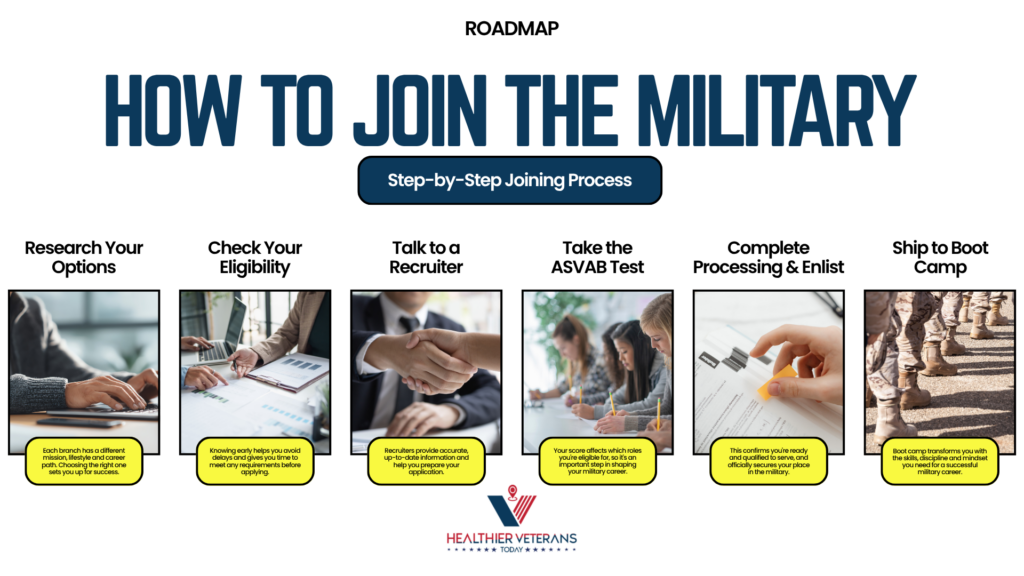
To join the military as an enlisted service member, start by choosing a branch and speaking with a recruiter. You’ll go through eligibility screening, take the ASVAB, complete medical and other evaluations at MEPS, review available jobs, sign an enlistment contract, and receive a scheduled date for basic training.
How to Join the Military: Step-by-Step Joining Process
What are the basic requirements to join the military?
Military enlistment requirements vary by branch, but applicants generally need to meet age, education, citizenship or residency, medical, and physical standards. Enlisted applicants also take the ASVAB, and each branch establishes its own qualifying scores and standards. Your individual circumstances can affect eligibility, so a recruiter can identify requirements specific to your situation.
What if you’ve served in the military before?
Prior military service can change the conversation considerably. Instead of approaching the process as a first-time applicant, tell the recruiter about your previous service from the beginning.
Your prior service may affect the path available to you, including questions about your previous military record, separation, specialty, time away from service, and whether any additional requirements or waivers apply. The Army also notes that prior service can be relevant when considering an age waiver [military.com].
That history is worth bringing up even if you left the military years ago. The recruiter needs accurate information about your previous service to determine what options are available rather than treating you like someone who has never served.
How old is too old to join the military?
There is no single age cutoff for every military branch. Current active-duty enlistment limits range from 28 to 42 depending on the branch, with the Army listed at 35 by USAGov and other Army guidance noting possible age waivers. Prior service and other circumstances can also affect eligibility.
Age limits currently listed by USAGov include:
- Air Force: 17-42
- Army: 17-35
- Coast Guard: 17-41
- Marine Corps: 17-28
- Navy: 17-41
- Space Force: 17-42
What should you expect when you talk to a military recruiter?
The first recruiter conversation is a screening and planning conversation, not the final enlistment step. Expect questions about your age, education, citizenship, goals, interests, and background. The recruiter can explain branch-specific requirements, career options, service commitments, testing, MEPS, and what documentation you’ll need to continue.
What to bring to your first recruiter meeting
You don’t need to arrive with the entire enlistment process completed. A little preparation can make the conversation much more productive.
Bring identification and any information you have about:
- Your birth date and citizenship or residency status
- High school diploma or GED
- College or vocational education
- Employment history, when relevant
- Previous military service, if applicable
- Questions about specific branches, jobs, benefits, or commitments
The Army says recruiters may eventually need documents such as a birth certificate, high school diploma, and Social Security card.
It also helps to arrive with a short list of questions. If there are particular careers that interest you, bring those up rather than waiting for the recruiter to choose the direction of the conversation [military.com].
A recruiter can explain what is available, but the decision about whether military service fits your goals remains yours. The Army explicitly says contacting a recruiter does not obligate you to join.
What happens at MEPS when you join the military?
MEPS, or Military Entrance Processing Station, is a major processing stage in military enlistment. Applicants complete required medical and physical evaluations and other screening before moving forward. Depending on the circumstances, MEPS is also where applicants continue the enlistment process, work through job selection, complete required interviews, and sign their contract.
Know this before your MEPS appointment
MEPS isn’t simply another appointment to check off the list. The information gathered there can affect whether you are cleared to continue with enlistment and what happens next.
Before going, follow the instructions provided by the recruiting staff. Bring every document you were asked to provide and make sure the information supplied during the process is accurate.
Be straightforward when answering medical, personal, and background questions. Trying to hide information can create problems later if it comes to light during the enlistment process.
The exact schedule and experience can vary, so follow the instructions provided for your appointment rather than relying on someone else’s MEPS experience.
How do you choose a military job?
Military job selection happens after you have completed the required testing and evaluations, but available positions are not unlimited. Your ASVAB results, qualifications, medical eligibility, branch needs, and open positions can all affect your choices. In the Army, for example, applicants work with a Guidance Counselor to select from jobs available at that time.
What if you don’t get the military job you wanted?
This is a decision to slow down for.
If your preferred military job isn’t available, you may have other positions that fit your scores and qualifications. You can also discuss whether waiting for another opening is an option or whether another job would still give you the type of experience you’re looking for.
The important point is to settle the job question before signing the enlistment contract. Don’t assume that a verbal discussion about a particular position automatically guarantees that position [military.com].
Job availability can change based on current openings and military needs. The Army specifically notes that available jobs depend on factors including ASVAB scores and positions open at the time.
If a specific career is one of the main reasons you’re considering enlistment, make that clear before moving toward the contract. The job itself can shape your training, daily responsibilities, and the experience you take with you after service.
How long does it take to join the military?
The process can move at different speeds depending on eligibility screening, testing, medical processing at MEPS, paperwork, job availability, and scheduling. Even after enlistment, there may be a waiting period before the scheduled departure for basic training.
The enlistment process doesn’t always end with an immediate ship date
Signing your contract doesn’t necessarily mean you’re leaving for basic training the next morning.
Some recruits enter a delayed status and remain at home until their scheduled training date. During that period, the recruiter may continue providing instructions and helping with preparations for the transition into military service.
For example, someone can be officially enlisted while still having time before reporting for basic training.
The Army notes that recruiters continue working with recruits after the service contract is signed, including helping them prepare for Basic Training and the transition into Army life.
What happens after you sign your enlistment contract?
After you sign your enlistment contract, you have formally committed to the terms of your enlistment and move toward your scheduled departure for basic training. The period before your ship date still matters: you may have paperwork to finish, instructions to follow, personal affairs to arrange, and standards to maintain before reporting for training.
Do this before your ship date
Once the contract is signed, shift your attention from deciding whether to enlist to getting ready for the transition.
A few practical priorities can make the period before departure easier:
- Follow instructions from recruiting staff – If the recruiter gives you a deadline or asks for additional documentation, deal with it promptly.
- Complete outstanding paperwork – Don’t assume signing the contract means every administrative task is finished.
- Keep your contact information current – Make sure the recruiting office can reach you if your schedule or instructions change.
- Prepare your personal affairs – Take care of important bills, employment arrangements, transportation, housing, and other responsibilities before leaving, and make sure your military spouse or partner understands what the transition will involve.
- Maintain the required standards – Don’t treat the period before basic training as a reason to stop preparing physically, including getting familiar with military haircut requirements and grooming standards, or disregard instructions.
Frequently Asked Questions
What are the requirements of joining the military?
Requirements vary by branch but generally include age, education, citizenship or residency, medical and physical qualifications, and entrance testing. Each branch sets its own standards, so eligibility should be confirmed with the recruiter for the branch you’re considering.
Do they give you $10,000 if you join the Army?
Not automatically. The Army currently advertises bonuses of up to $10,000 for certain opportunities, including a Quick Ship Bonus for qualifying recruits who report to Basic Training within 30 days, but eligibility depends on factors such as job selection, skills, qualifications, and timing.
Bonuses can also vary by the type of enlistment and available incentives. The amount advertised should not be treated as guaranteed money for every new recruit.
How much military pay?
Military pay varies based on factors such as rank or pay grade and years of service. Basic pay is only one part of total compensation; qualifying service members may also receive allowances, special or incentive pay, and other benefits.
For example, the Army’s current pay information separates base salary from potential bonuses, housing, food, and clothing benefits rather than presenting one universal salary for every Soldier.
Conclusion: Are you ready to take the next step?
Service is a major commitment, so the first step in how to join the military isn’t signing anything. Start by deciding which branch and type of service actually fit what you’re looking for, then take that list of questions to a recruiter.
From there, the process has a clear path: eligibility, testing, MEPS, job selection, enlistment, and eventually basic training. Use the Step-by-Step Joining Process roadmap above to see how those stages connect before you take that first official step.
The process may take time, and the exact route can vary from one applicant to another. What matters is entering the conversation prepared to ask specific questions and make decisions before signing your contract.